
If Abbaye des Vaux de Cernay Were a Woman
If Abbaye des Vaux de Cernay Were a Woman
An Editorial Wedding Guide by Le Joli Studio
Planning a wedding at Abbaye des Vaux de Cernay?
This editorial guide explores one of France’s most iconic luxury wedding venues through the lens of Le Joli Studio, combining inspiration, French culture and timeless wedding photography.
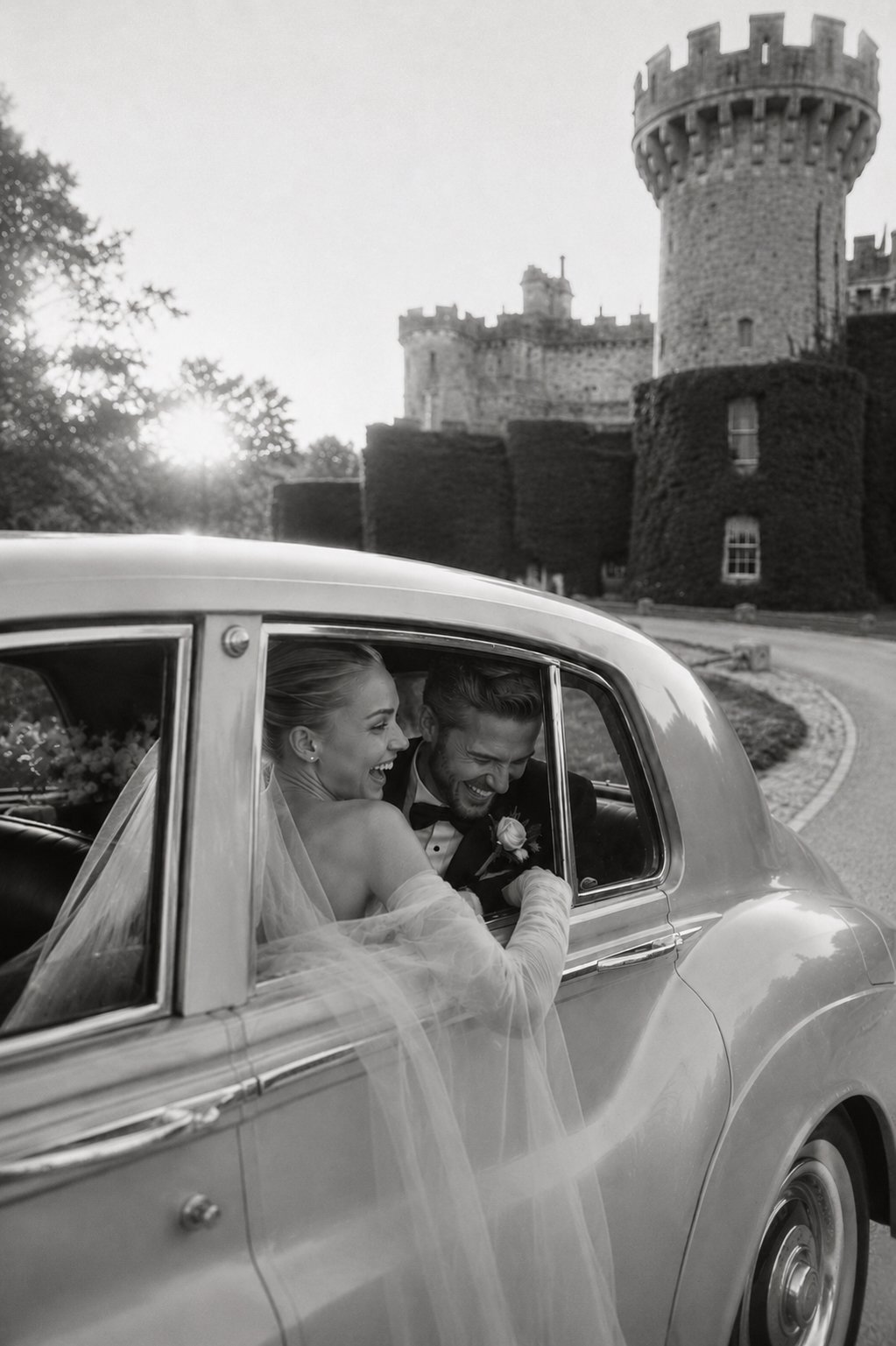
If Abbaye des Vaux de Cernay were a woman, she would not be an ingénue. She would never describe herself as luxurious.
That would be terribly gauche.
She would not wear blush tulle, collect peonies or describe everything as dreamy.
She would have lived.
She would have read Colette before breakfast and Françoise Sagan too young. She would know that a ruined wall can be more seductive than a freshly gilded ballroom, and that the people who constantly announce their refinement rarely possess very much of it.
She might have the cheekbones of Tilda Swinton, the composure of Charlotte Rampling and something of Isabelle Huppert’s unnerving intelligence. Although naturally, she would be French.
Or at least French enough to consider punctuality negotiable, champagne medicinal and over-decoration a minor moral failing.
She would not attempt to charm everyone.
That is largely why everyone would want to be invited.
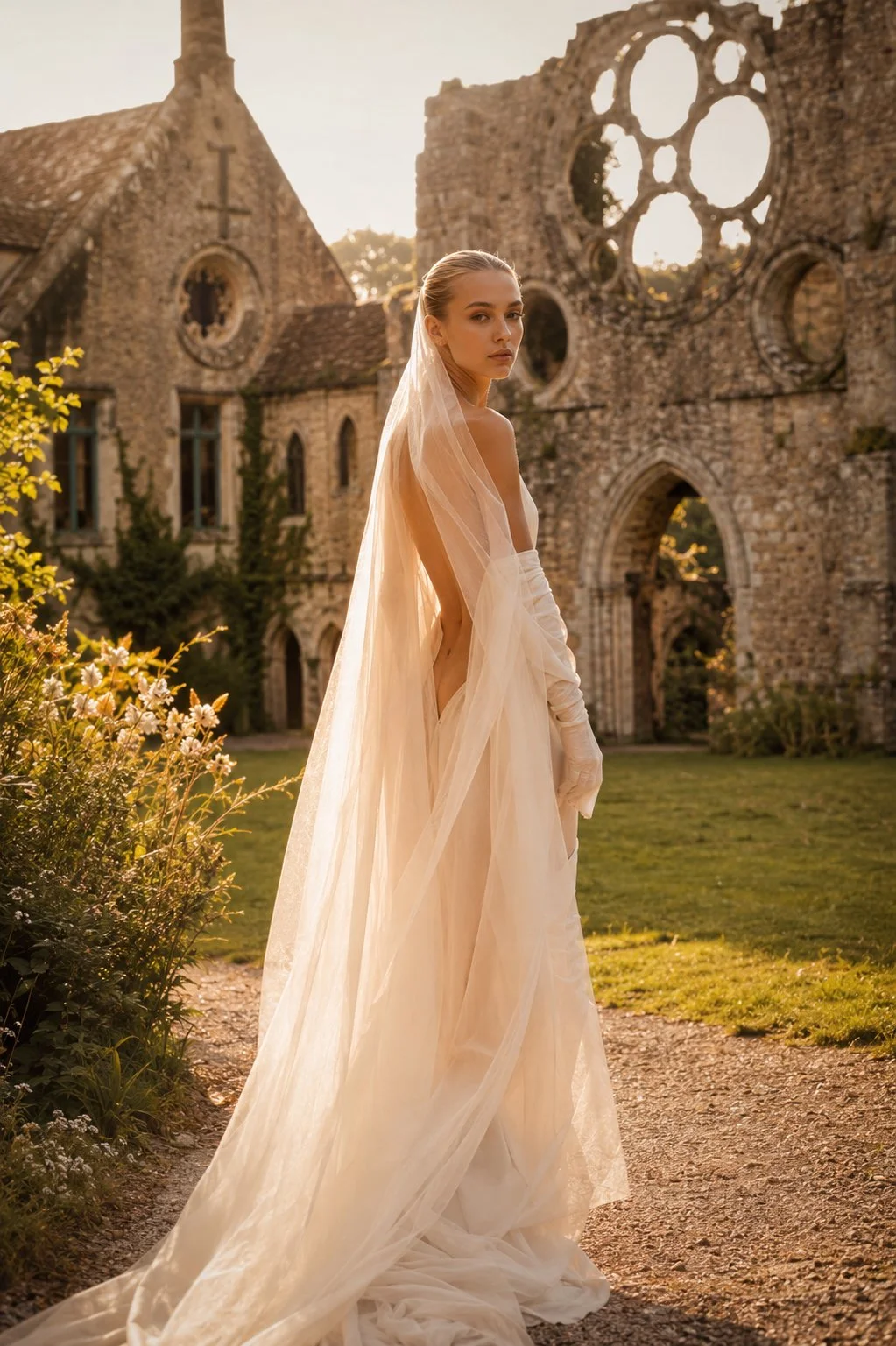
Golden hour wandering through the ruins of Abbaye des Vaux de Cernay.
She Would Have Very Little Interest in Trends
The Abbey was founded in the twelfth century, which gives it a useful perspective on seasonal colour palettes.
It has survived religious upheaval, neglect, reconstruction, changing dynasties and several centuries of questionable furniture. It is therefore unlikely to be troubled by whether butter yellow is having a moment.
This is one of its considerable advantages as a wedding venue.
Many beautiful places are dependent on decoration. Remove the flowers, candles and carefully positioned furniture, and there is surprisingly little left to discuss.
At Vaux de Cernay, decoration enters a conversation already in progress.
The Gothic ruins, the cloister, the dark timber, the lake, the forest and the weathered stone possess their own authority. A floral designer can respond to them. A couturier can flirt with them. Neither should attempt to overpower them.
The Abbey has waited eight centuries. It will not be upstaged by a centrepiece.
She Would Dress Extremely Well, but Never Explain the Outfit
There is something distinctly French about clothes that do not disclose how hard they worked.
A bias-cut silk dress.
A severe black jacket.
An old family jewel worn with an almost indecent lack of ceremony.
The Abbey operates in much the same manner.
Its grandeur is not polished into submission. Its textures remain visible. Stone, tapestry, carved wood and old brick are allowed their age. Nothing has been made so immaculate that it loses its character.
This is where the right wedding wardrobe becomes interesting.
Not a costume designed to compete with the architecture, but couture with movement and personality: an Elie Saab gown catching against an ancient doorway, a sculptural Lanvin silhouette in a room that has seen far stranger fashions, a dinner dress that might have pleased Loulou de la Falaise.
The ideal bride here does not look as though she has been arranged to match the property.
She looks as though both she and the Abbey have excellent taste and have agreed, discreetly, to spend the weekend together.
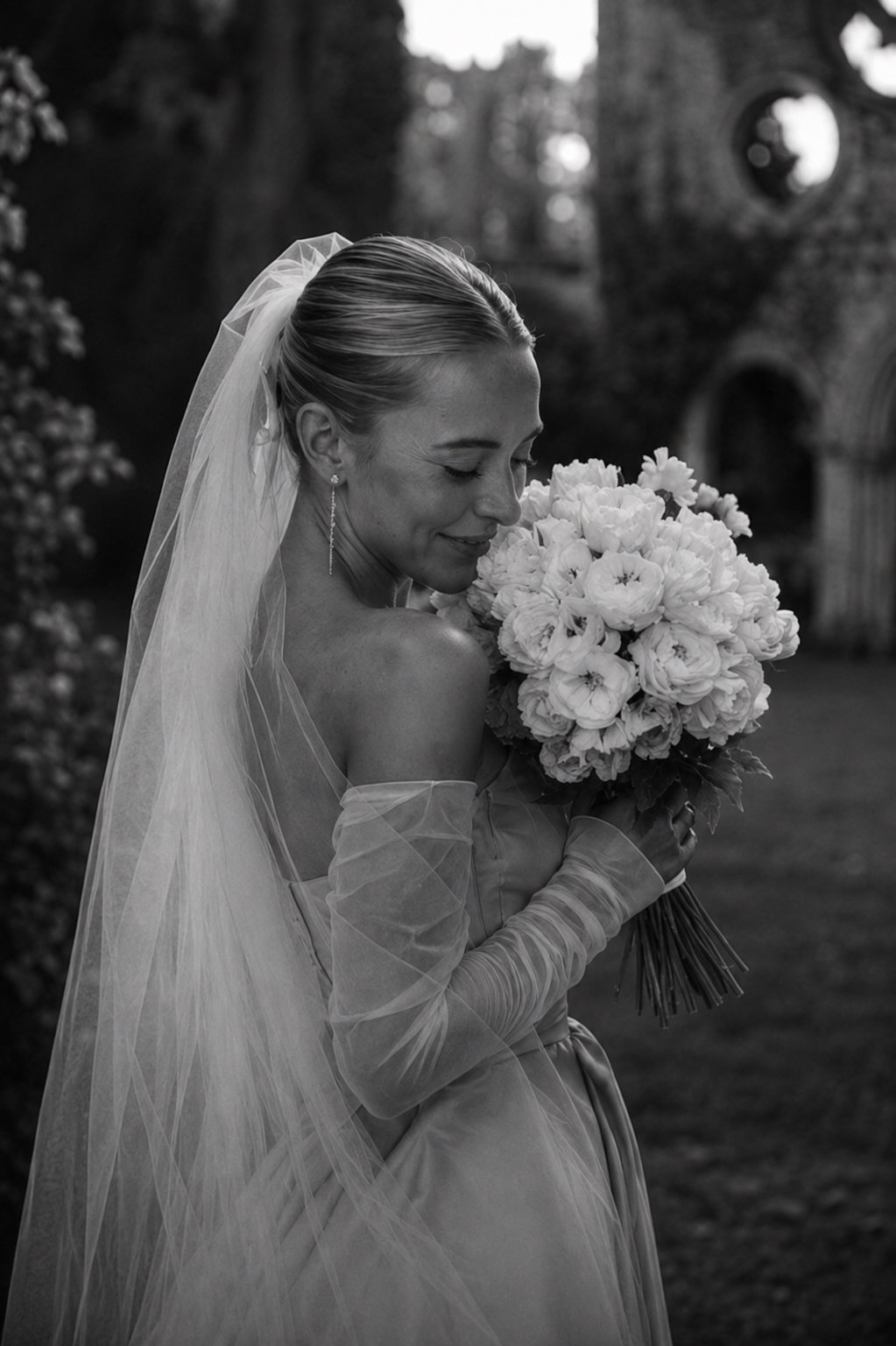
A quiet moment before the celebration, captured among the historic ruins of Abbaye des Vaux de Cernay.
She Would Prefer Rohmer to a Romantic Comedy
There would be no need for violins every time somebody crossed the courtyard.
The location already understands drama.
A veil moving through a cloister. A bride disappearing briefly behind a stone column. Guests walking back from dinner beneath umbrellas. A groom trying to remember his speech while everyone he loves watches him fail quite beautifully.
These are not grand gestures.
They are better.
Éric Rohmer understood that desire often exists in pauses, detours and conversations that seem to be about something else. Jacques Demy knew that colour could carry emotion without becoming decorative. Agnès Varda noticed the eccentric detail everyone else had overlooked. Alain Resnais understood that architecture can behave almost like memory itself.
A wedding at the Abbey deserves this sort of visual attention.
Not imitation cinema. Not a heavy-handed reconstruction of Last Year at Marienbad. Simply photographs that allow rooms, weather, gestures and people to have more than one meaning.
Because a cinematic image is not merely an image with grain.
It is an image that leaves something unresolved.
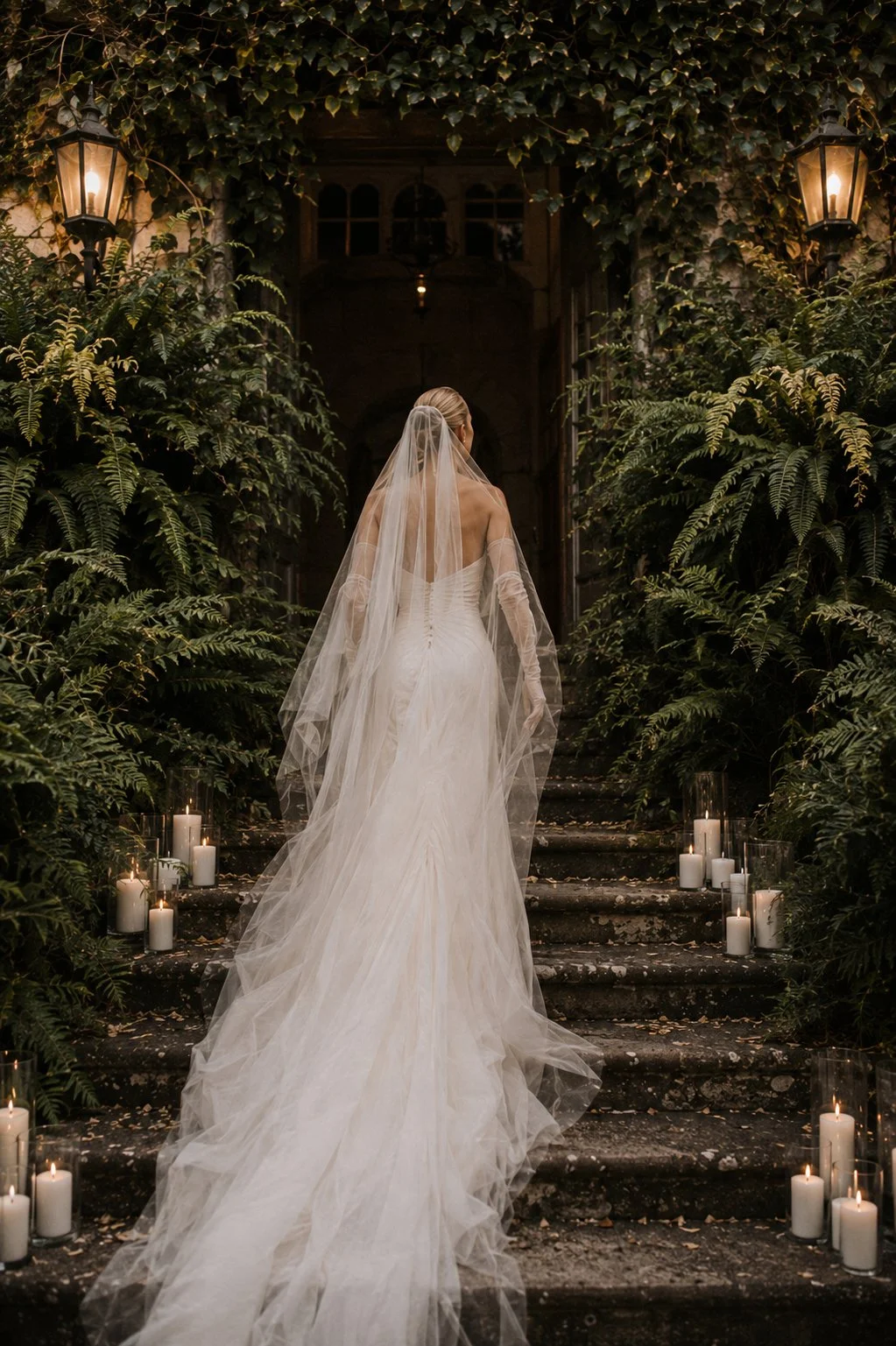
Her Idea of Glamour Would Not Involve Behaving Properly
French glamour has never been especially obedient.
It belongs as much to Jeanne Moreau laughing with her mouth open as it does to Catherine Deneuve remaining perfectly still. It can be a smudged eye at midnight, a heel abandoned beneath the table, or a bride eating something before the caterer has formally declared it available.
The Abbey needs this life.
Without it, the photographs become an architectural brochure with unusually expensive clothing.
A genuinely glamorous wedding is not one in which everybody remains pristine. It is one in which elegance survives human behaviour.
Champagne spills.
Silk creases.
Children invade the aisle.
A grandmother monopolises a handsome waiter.
Someone dances before dinner.
The bride’s hair looks better at 1 a.m. than it did at 1 p.m., although the hairstylist may disagree.
This is where photography becomes more than visual evidence of a beautiful production. It catches the private comedy inside the splendour.
And that comedy is often where affection lives.
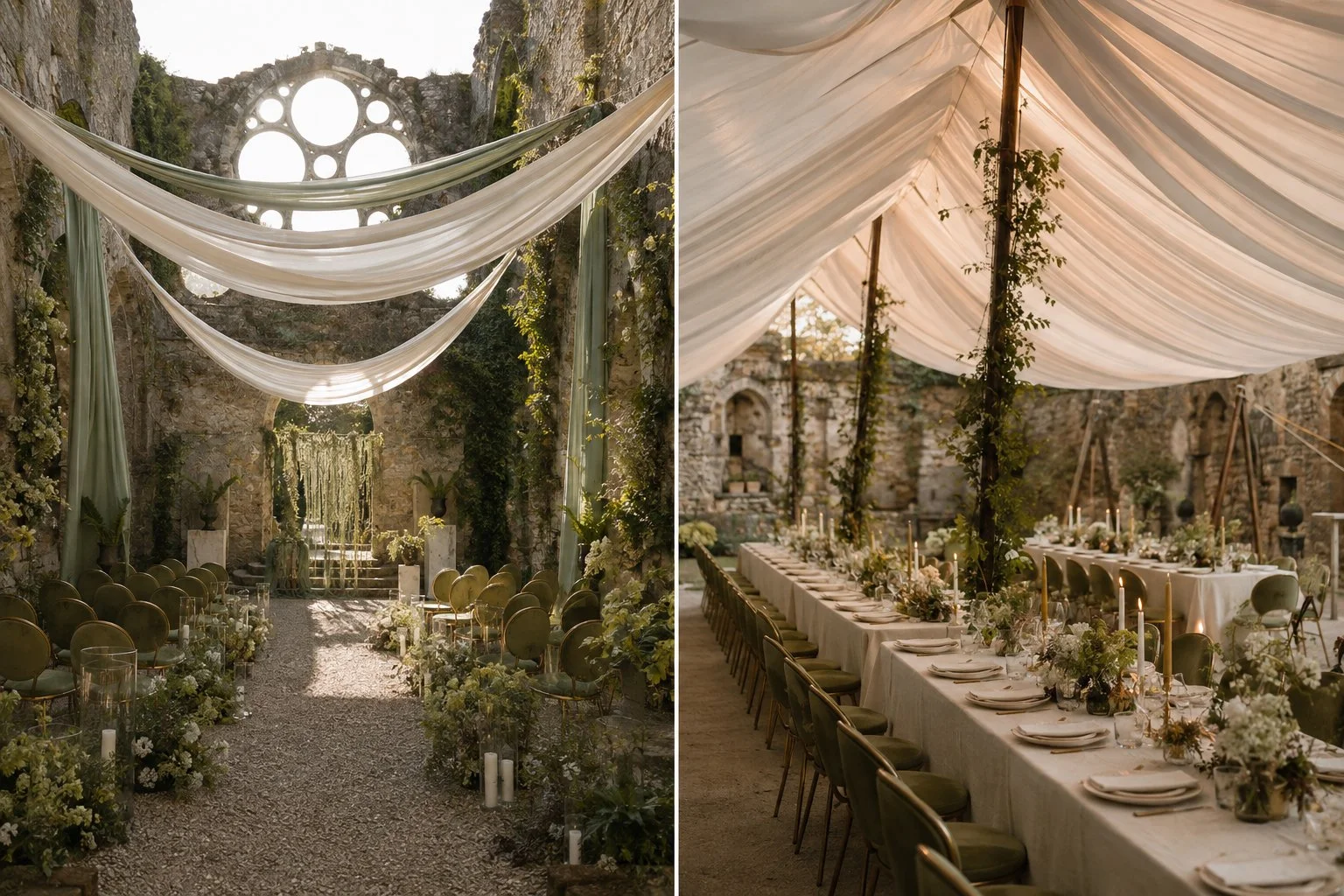
Luxury Wedding Reception at Abbaye des Vaux de Cernay
She Would Be Suspicious of Anything Described as “Instagrammable”
The word suggests a place has been created to be consumed from one approved angle.
The Abbey has too many moods for that.
In the morning, its interiors can feel almost monastic. By afternoon, the gardens become sociable and expansive. In poor weather, the stone darkens and the whole estate acquires the magnificent gloom of a nineteenth-century novel in which somebody has made a disastrous but beautifully dressed decision.
Then evening arrives. The scale changes. Rooms become intimate. Candlelight picks out faces rather than architecture. Guests stop admiring the venue and begin inhabiting it.
That progression matters enormously to a photographer.
The strongest visual story will not consist of ten variations of the same flattering view. It will move from restraint to abundance, solitude to sociability, ceremony to mild disorder.
A place this complex should never look identical from noon until midnight. Neither should a marriage.
She Would Know Paris, but Be Relieved Not to Live There
Vaux de Cernay lies within reach of Paris, yet the psychological distance is rather greater than the mileage suggests.
That is part of its seduction for international couples.
Guests can arrive through Paris, spend a few days behaving impeccably at Hôtel Costes or very badly elsewhere, and then leave the city for the forest and the Abbey. The journey creates a transition without demanding the logistical commitment of Provence or the Riviera.
The setting feels removed, but not inaccessible.
French, but not postcard French. Historic, but not ceremonial in the Versailles sense.
This is not France performing for visitors with lavender, striped shirts and a strategically parked Citroën.
It is France on better behaviour. Mostly.
She Would Be an Excellent Hostess and a Merciless Editor
The finest weddings at Vaux de Cernay will not attempt to use every possibility simply because it exists.
Every ruin does not need flowers.
Every corridor does not need candles.
Every course does not need a performance.
Restraint here is not minimalism. It is editing.
A ceremony beneath ancient stone.
An aperitif beside the water.
Dinner shaped by fabric, fruit, candlelight and confident florals rather than a forest of decorative ambition.
Music that changes the energy of the room instead of merely filling silence.
A weekend with rhythm, surprise and enough empty space for people to become themselves.
A very good wedding planner understands this. So does a very good couturier. So, ideally, does the photographer.
The question is never: What else can we add?
It is: What would be unforgivable to remove?
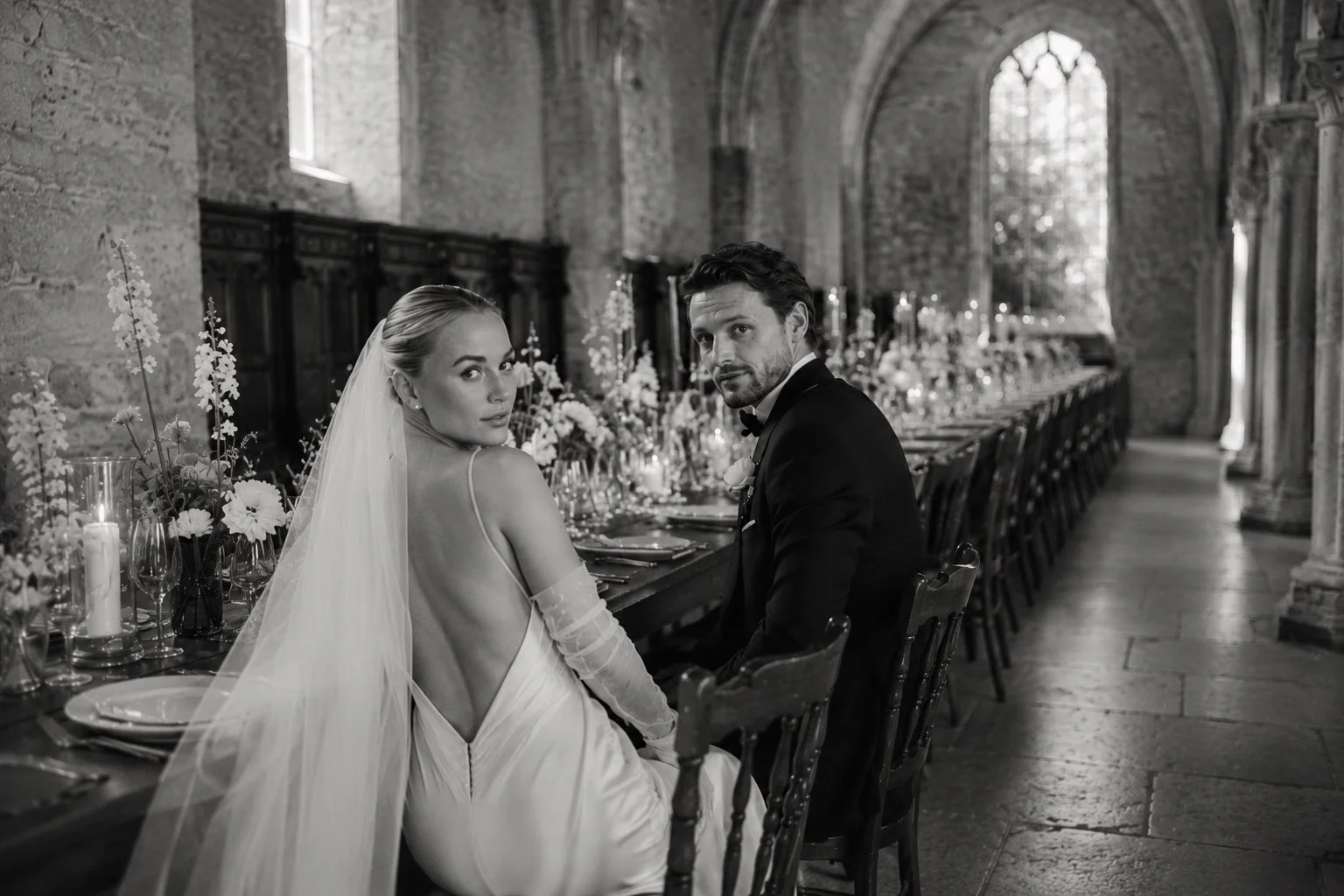
She Would Never Pose. She Would Occupy the Space.
Most brides arrive believing they need to perform happiness.
To smile at the correct moments.
To stand beautifully.
To remember their profile.
She would find all of this exhausting.
She would not pose for the Abbey.
She would inhabit it.
She would wander into a forgotten corridor simply because the light looked interesting.
She would stop halfway up a staircase because somebody had just made her laugh.
She would disappear for three minutes simply to breathe.
She would hold her husband’s hand without wondering where the photographer was standing.
She would forget the camera.
Which is precisely when the photographs become interesting.
For me, directing a wedding has never meant choreographing every gesture.
It means creating enough trust that people eventually stop performing altogether.
That is when elegance stops looking manufactured. And starts looking inevitable.
She Would Understand That Beauty Is Never Rushed
The most beautiful photographs rarely happen while everybody is looking at the camera.
They happen between places.
A dress lifted to cross wet grass.
The silence after the ceremony.
The five minutes nobody planned.
The walk back to dinner.
The moment before somebody speaks.
Luxury has time.
That is why the finest weddings never feel hurried.
Neither should the photography.
She Would Know That Couture Is Meant To Move
A couture gown was never designed to stand perfectly still.
It breathes. It twists. It catches the wind. It folds unexpectedly when somebody laughs. It brushes against centuries-old stone.
By midnight, it carries memories as well as craftsmanship.
The photographer’s task is not to preserve perfection. It is to witness transformation.
She Would Welcome Bad Weather
Imagine this. Rain arrives ten minutes before dinner.
Somebody panics. She doesn’t.
The stone becomes darker. The gardens grow quieter. Candles suddenly matter more. Guests move closer together. Conversation slows.
The photographs become impossible to repeat. Some weddings are remembered because everything unfolded exactly as planned.
Others because life interrupted the plan.The second kind usually ages better.
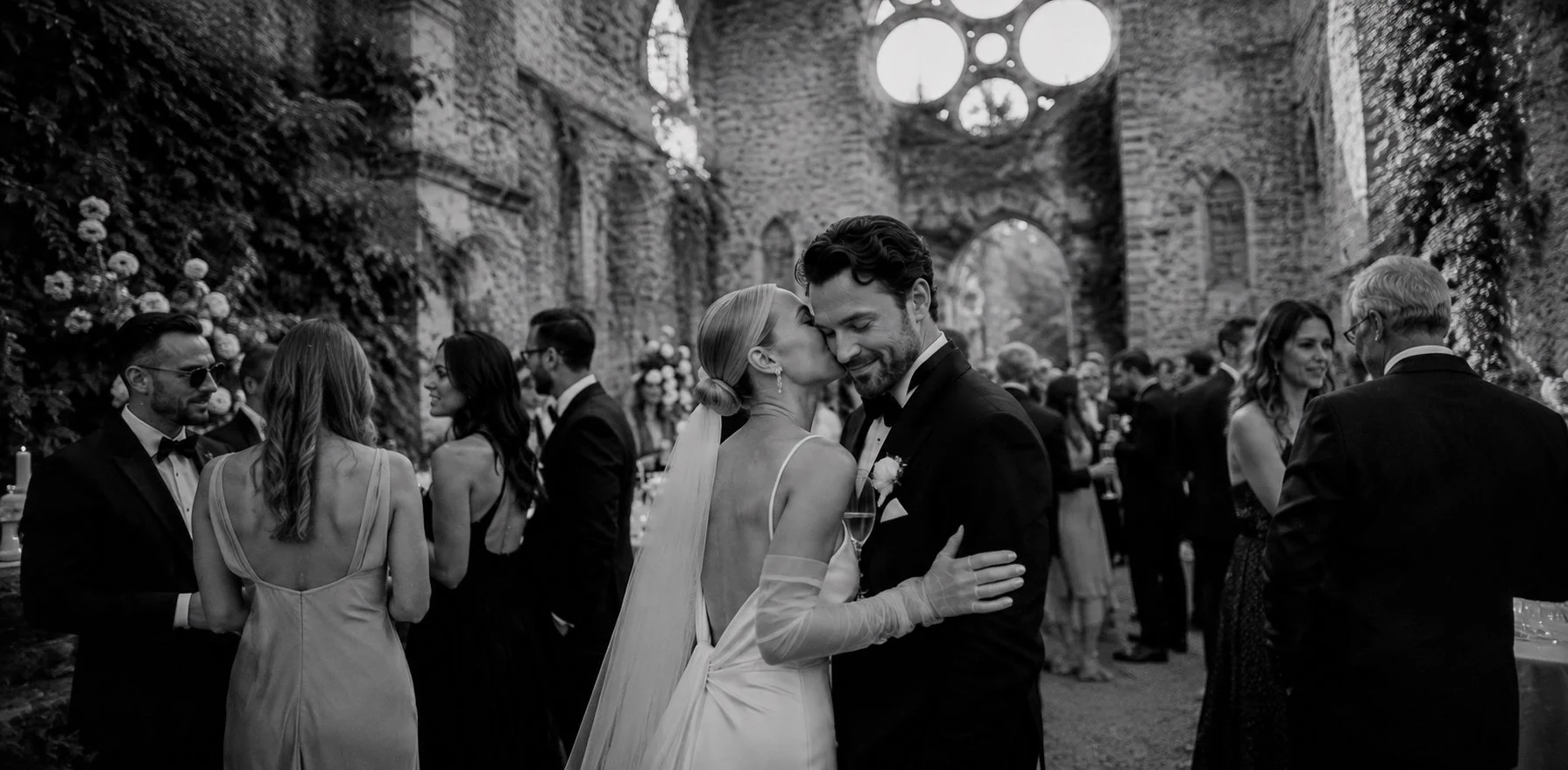
Even surrounded by loved ones, some moments belong only to the two of them.
She Would Marry a Man With Opinions
Not because agreement is romantic. Because curiosity is.
He would choose his suit as carefully as she chose her gown. He would care about architecture. About books. About music.
He would notice beautiful hotels. He would know the difference between style and fashion. He would laugh easily.
He would never mistake extravagance for elegance.
The most memorable photographs are rarely made by two perfect models.
They are made by two interesting people.
The Photographer Should Eventually Disappear
A photographer who shouts directions every thirty seconds quickly becomes another decoration.
An expensive one.
I believe in guidance.
But only until people forget they are being guided.
The finest photographs usually happen just after everyone believes the photograph is over.
When shoulders relax.
When conversations resume.
When somebody reaches instinctively for somebody else’s hand.
When elegance becomes unconscious again.
A Final Introduction
If Abbaye des Vaux de Cernay were a woman, she would not follow you on Instagram.
She would probably forget where she left her telephone.
She would own exceptionally good coats.
She would dislike unnecessary adjectives.
She would have friends in several countries who remained slightly intimidated by disappointing her.
She would never call herself iconic.
She would leave that to less interesting women.
And if she were choosing a photographer, she would not ask who could make her look beautiful.
She would ask who could make the weekend feel unforgettable.
I suspect we would get along rather well.
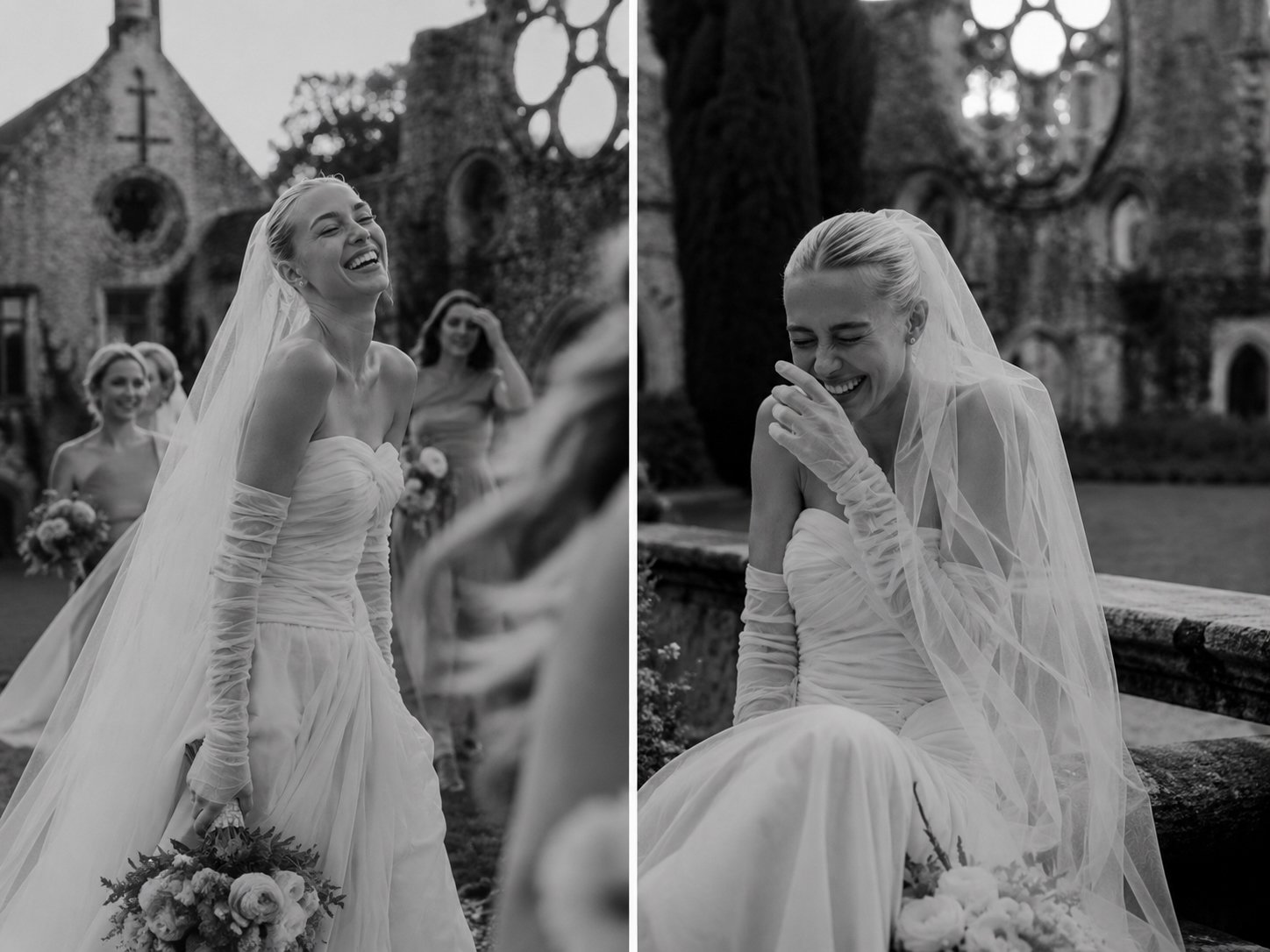
Frequently Asked Questions
-
Yes. Like everywhere else in France, the legal civil ceremony must take place at the local town hall. Most couples therefore choose to celebrate their civil marriage beforehand and enjoy either a symbolic ceremony or a religious blessing at Abbaye des Vaux de Cernay, followed by their reception and wedding celebrations.
-
Yes. Weddings require the exclusive privatization of the estate, ensuring complete privacy for you and your guests. This allows the celebration to unfold across the entire property, transforming the venue into your own private retreat for the duration of your wedding weekend.
-
Abbaye des Vaux de Cernay can host up to 150 guests, depending on the spaces selected and the format of the celebration. Its combination of elegant indoor rooms, historic ruins and landscaped gardens also makes it an exceptional venue for more intimate weddings.
-
Founded in 1118 by monks from the Savigny order, the abbey became part of the Cistercian order in 1147. Following centuries of prosperity, decline and abandonment after the French Revolution, it was brought back to life in the late nineteenth century by Baroness Charlotte de Rothschild. Today, this remarkable history, together with its medieval ruins, landscaped park and elegant hotel, makes Abbaye des Vaux de Cernay one of France’s most distinctive luxury wedding destinations.
-
Yes. One of the estate’s greatest strengths is its luxury accommodation, allowing family and friends to stay on site and transform a single wedding day into a complete wedding weekend. Rather than rushing home after dinner, everyone can fully enjoy the celebration in one of France’s most beautiful country estates.
-
The estate is beautiful throughout the year, but from a photographer’s perspective, late September is particularly magical. The softer light, the first hints of autumn colour and the warm tones of the historic stone create an atmosphere that feels both timeless and cinematic.
-
For outdoor celebrations, I generally recommend a late-afternoon ceremony. This allows guests to enjoy cocktail hour in beautiful natural light while creating relaxed couple portraits during golden hour, just before dinner, when the estate is at its most photogenic.
-
Every venue has its own personality. Rather than imposing a photographic style, I prefer to let each place guide the visual narrative. At Abbaye des Vaux de Cernay, that means balancing editorial elegance with genuine emotion, creating photographs that feel timeless rather than trend-driven. Inspired by cinema, fashion and French art de vivre, my approach is discreet, intentional and deeply human.
Planning Your Wedding at Abbaye des Vaux de Cernay?
If this way of seeing weddings resonates with you, I’d love to hear your plans.
Whether you’re celebrating an intimate weekend or a three-day destination wedding, every story begins with a conversation.